What should be named before a choice is discussed?
A framing record distinguishes the decision at hand from adjacent questions, identifies what is currently knowable, and keeps terms from silently changing during review.
Accession 01 / Open inquiry
Fexudami Decision Archive is an archival research house for questions that deserve a visible paper trail: sources, assumptions, framing choices, and unresolved edges—kept together for considered review.
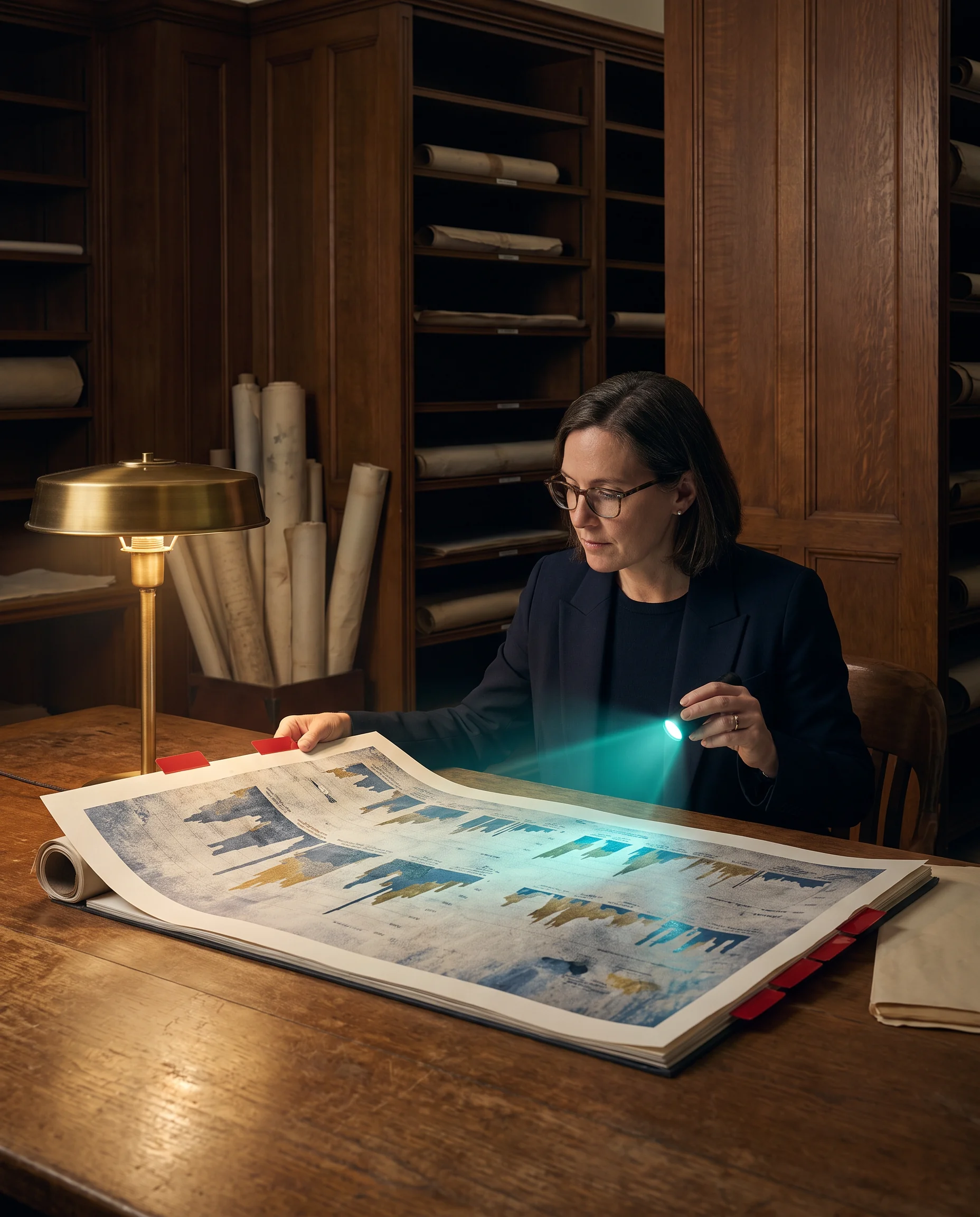
A question is not a conclusion.
EVIDENCETraceable context, placed before certainty.
Query drawer
Each drawer begins with a question worth holding still. Open a tab to see the kind of annotation a research brief can preserve.
A framing record distinguishes the decision at hand from adjacent questions, identifies what is currently knowable, and keeps terms from silently changing during review.

Evidence annotation
Rather than turn a source into a verdict, a field note gives it a place, a reading, and a visible limitation.
| Record layer | What is retained | How it is read |
|---|---|---|
| A / SOURCE | Origin & conditionsWhere an item came from, when it was encountered, and the context available with it. | A source is not detached from its setting. The note records what may shape its use before asking it to carry a broader meaning. |
| B / READING | Relevant passageThe portion that bears directly on the stated question, marked in ordinary language. | Interpretation is separated from quotation. This makes the movement from material to inference available for review. |
| C / LIMIT | Unresolved edgeAbsences, ambiguity, alternative readings, and factors outside the record. | Limits remain visible. They are not an inconvenience at the end of the page; they belong beside the reading. |


Model notes index
These notes describe a posture toward material, not a promise about what any decision will produce.

Before gathering more material, establish a short plain-language statement of the decision under discussion and distinguish it from a wider strategic conversation.
A document, conversation, observation, or dataset is placed with its available context, rather than being stripped down to a convenient fragment.
The archive identifies the difference between what a record says, what a reader takes from it, and what remains a judgment for the people responsible.
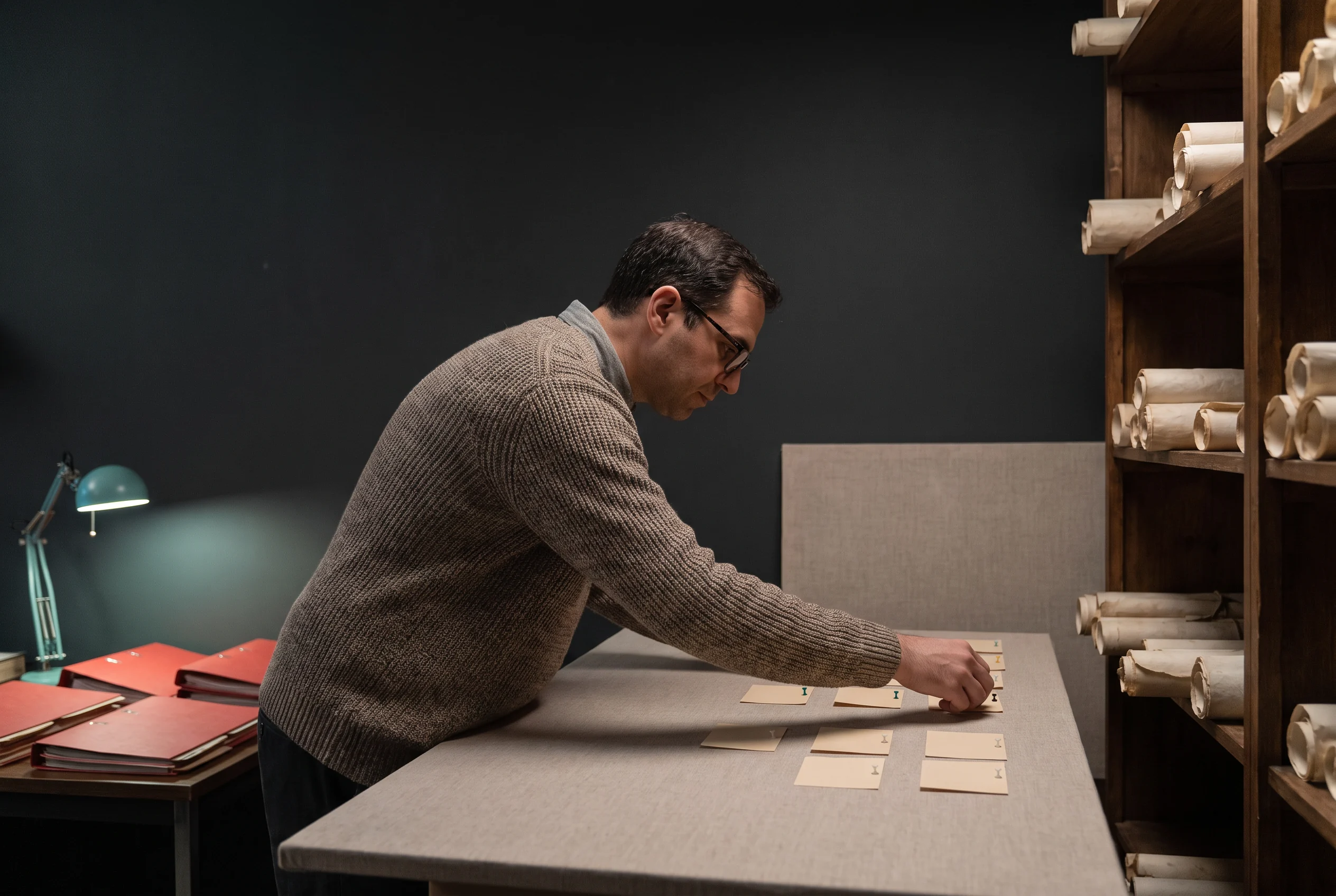
Fexudami does not replace accountable judgment. The paper trail is designed to give that judgment more legible context.

Archive room pause
Source ledger
A ledger does not flatten source material into a single surface. It gives each contribution an appropriate place in the file.
 01
01Original material that can be located, named, and read in its immediate context. Its wording is kept close to the inquiry that calls for it.
Folder A / direct materialDetails that help locate a record in time, setting, and stated purpose.
Margin BA plausible alternate interpretation held beside the first reading.
Slip C 04
04A point needing more inquiry, retained without filling the gap with assumption.
Loose leaf DA compact account of what was considered, what was set aside, and who retains responsibility for the choice.
Closing memo EDecision guardrails
Research context can inform discussion. It cannot guarantee, predict, or substitute for the decisions and responsibilities of the people using it.
Materials are prepared to clarify a question and its evidence, not to promise a result, forecast a future, or imply that one path will prevail.
Fexudami does not make the choice for a reader. People responsible for a decision retain responsibility for its judgment, context, and consequences.
Incomplete records, alternative readings, and boundaries are not concealed. Where material does not support a conclusion, the archive says so plainly.
The question card names the matter under review in ordinary language. It is the anchor that helps later material remain relevant, while still leaving space for the question to be revised openly.
Request card
Use the request card to introduce a question, the material already in view, and any timing that shapes the reading. This browser-only form does not send your information; it simply confirms that your note is ready for you to email.
Reading room questions
These answers explain the archive posture in practical, deliberately limited terms.